Full and partial rewires, and consumer unit replacements carried out to the 18th Edition of the wiring regulations. Old rubber and fabric cable, borrowed neutrals, boards with no RCD protection at all. It is a big job in a lived-in house, so you get told what it involves before it starts.
A full rewire means every circuit in the house comes out and goes back in new. Sockets, lighting, cooker, shower, immersion, the lot, back to a new consumer unit. Floorboards come up and chases go into walls, so it is disruptive, and anyone who tells you otherwise has not done one.
A partial rewire is the more common job. The lighting is sound but the sockets are on an old radial with no earth, or the kitchen has been extended twice and nobody ever upgraded the supply to it. There is no sense replacing cable that is doing its job perfectly well, so what gets replaced is what needs replacing, and you get told which is which.
Plenty of boards in this part of the world are still wired fuse carriers, or early plastic units with one RCD covering everything so a fault in the garden takes the whole house out. A modern board splits the circuits so a fault in one place leaves the rest of the house lit, and it adds protection that simply did not exist when a lot of these houses were wired.
A board change is not just swapping a box on the wall. Every circuit gets tested before it goes back on, and that is where the honest problems turn up. If a circuit fails its test, putting a new board in front of it does not fix anything, and you get told that rather than finding out later.
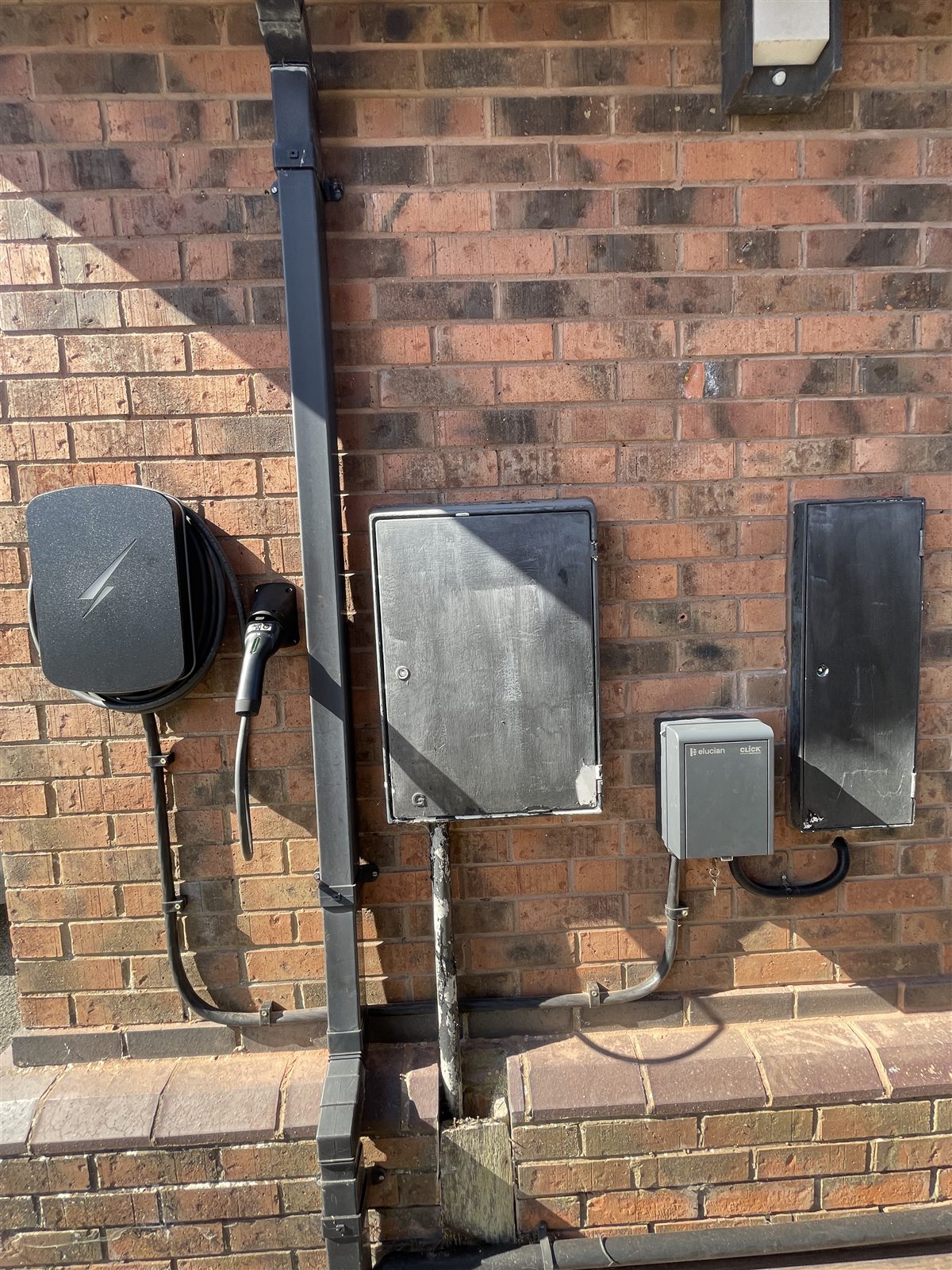
If the fuse board is being changed anyway and there is an electric car on the way, doing both in one visit is cheaper than doing them separately. A consumer unit change is about £1,000 and a standard charger is £1,400, so the two priced on their own come to £2,400. Together in one visit it is £2,000.
That is a real saving rather than a rounded number, and it exists because one visit costs less to do than two.
This work goes out across the whole patch, from Swaledale and Wensleydale down to York and Harrogate.
The honest answer is that you cannot tell by looking at the sockets, and neither can anyone else. What tells you is a test. An EICR inspects and tests the whole installation and comes back with a written report saying what condition it is in. That is the right first step if you are unsure, rather than paying for a rewire you may not need.
Most people stay in. Circuits go off in sections rather than the whole house at once wherever that is possible, so you keep power and light somewhere while the work goes on. It depends on the house, and it gets discussed before anything is booked rather than sprung on you on day one.
They are the same thing, just different words for different generations. Fuse board usually means the older sort with rewirable fuse carriers. Consumer unit is what a modern one with circuit breakers and RCD protection is called.
Tell me roughly where you are and what needs doing. I come back to you within 24 hours, Monday to Friday.